
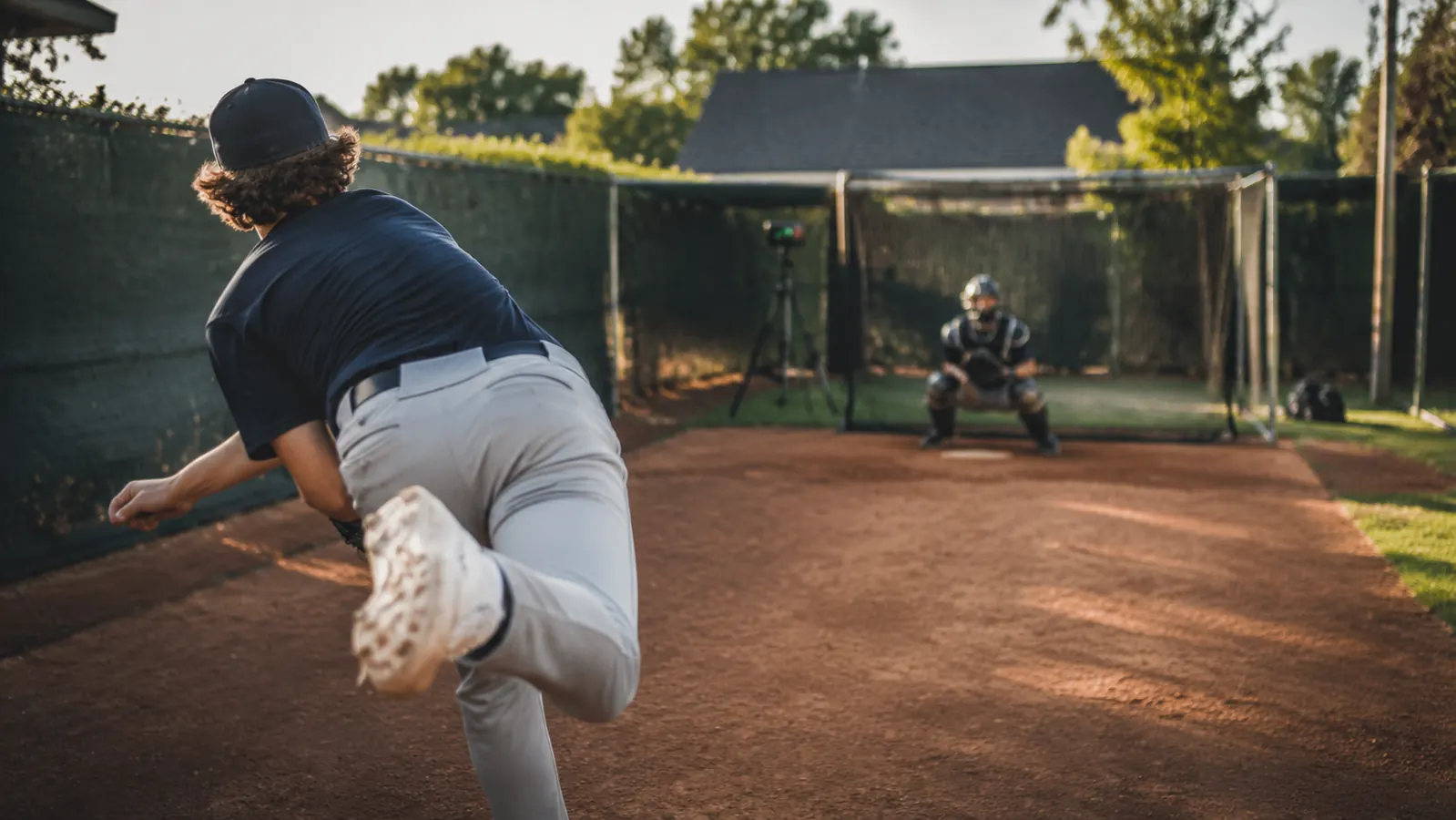
My son Cole is fourteen and has asked me the same question after almost every bullpen session for the past two years: how hard was that one. For a long time I didn't have a real answer, just a guess based on how loud the ball hit the glove or how tired his arm looked at the end of an inning. Once we picked up a Pocket Radar Smart Coach, that guessing stopped, and it changed how we talk about pitching more than any lesson or drill has.
I'll admit I was skeptical it would earn a permanent spot in the bag. Radar guns have a reputation as a showcase-day toy, something a scout points at your kid once a summer and then forgets about until next year's camp. Ours gets used two or three times a week now, in the backyard, in the cage during winter, and at every open bullpen, and it's changed how Cole approaches a practice more than any single drill we've added. Here's what actually made the difference for us.
Stop guessing at how hard your kid is really throwing
A real reading beats a parent's ear or a coach's gut feel every time. Here's the radar gun we use in our own backyard bullpen sessions.
Amazon Check Today's Price on Amazon →It replaces guessing with an actual number
Before we owned one, every conversation about velocity was subjective. Coach said he looked faster. I thought he seemed the same as last month. Cole was convinced he'd added five mph over the winter just because his arm felt looser. A radar reading ends the debate in one pitch. Cole threw 61 mph the week we bought the Smart Coach and knowing that exact number gave him something concrete to chase instead of a vague sense of progress.

It catches velocity dips before they become injuries
A gradual drop in velocity across a bullpen session is one of the earlier signs of arm fatigue, well before soreness shows up the next morning. We started logging Cole's readings pitch by pitch, and twice now we've shut a session down early after his last five throws dropped three to four mph off his first five. That's not something a parent standing behind the fence can feel by eye.
It gives every drill a measurable before and after
We added a simple long-toss and med-ball rotational program in January, and the only reason we know it worked is the radar readings from before and after. Cole sat around 58 mph in January and was consistently hitting 64 by late March on the same mound, same distance, same warmup routine, same number of pitches. Without a number, that improvement is just a feeling. With one, it's twelve weeks of actual data we can point to when he wants to know the program is worth the extra time.
It makes bullpen sessions feel like they matter
Cole used to phone in cold-weather bullpens in February, going through the motions without much intent. The first time he saw a real number pop up after a lazy fastball, that changed. Kids compete against a number in a way they don't compete against a coach saying throw it harder. Every pitch in a session with the radar running gets more effort than one without it.

It settles arguments with teammates without anyone getting defensive
Every pitching staff has a running debate about who throws hardest. Cole's travel team used to settle it by feel, which mostly meant whoever talked the loudest won. Once a few of the pitchers started bringing a radar gun to open bullpens, the arguing stopped because the number is the number. Nobody gets to inflate their own velocity when there's a screen showing 66 mph and not 71.
It gives college and showcase recruiters a real data point
A coach at a college camp doesn't want to hear a parent's estimate of their kid's velocity, they want a logged number from a device with a track record. The Pocket Radar brand shows up at enough combines and showcases that recruiters recognize the readings as legitimate rather than a number a parent made up on the drive home. Cole's showcase profile now lists a velocity range built from actual logged sessions over several months, not a single lucky throw or a guess.
It's small enough that it actually comes to every practice
We looked at a couple of stationary radar setups before landing on this one, and the honest truth is a bulky unit stays in the garage. The Smart Coach fits in the same bag pocket as Cole's cleats. It comes to backyard sessions, indoor cage work in the winter, and the weekend bullpen at the park, because it weighs almost nothing and doesn't need a tripod to get a reading.

It works for the catcher and the hitter too, not just the pitcher
Once we had it out, Cole's little sister Piper wanted her exit velocity checked off the tee, and their catcher wanted his throw-down time and pop time measured to the tenth of a second. One device covers a lot more of a practice than just tracking one pitcher's fastball, which made it easier to justify the cost to the rest of the team's parents when we started splitting sessions and passing it around the field.
It pairs with an app so the numbers don't just disappear
A cheap radar gun gives you a number for three seconds and then it's gone. The Smart Coach logs every session to a phone app, so we have a running record going back over a year now, sorted by date and by which mound or cage he threw from. When Cole's pitching coach asks how the velocity program is going, I can pull up an actual chart instead of trying to remember what a bullpen from six weeks ago looked like.
It takes the emotion out of a bad outing
After a rough start where Cole gave up four runs in the second inning, his instinct was to blame his arm strength and say he'd lost his fastball for good. The radar readings from that game told a different story, he was actually sitting a mph higher than his season average, and the runs came from location, not velocity. Having a real number to separate effort from outcome kept one bad game from turning into a confidence spiral that lasted the rest of the week.
What I'd Skip
I'd stay away from the sub-$50 novelty radar guns sold as toys online. We tried a cheap one before the Smart Coach and the readings swung ten or more mph between throws with no consistency, which made it worse than useless for tracking real progress. It also missed readings entirely on breaking pitches more often than it caught them. If you're going to spend money on a radar gun at all, spend it on one accurate enough that a number six months apart actually means something, or don't bother buying one at all.
The number doesn't lie to make you feel better, and that's exactly why it's useful.
Give your pitcher a real number to chase this season
If bullpens have started feeling like a guessing game, a Pocket Radar Smart Coach turns every throw into a data point you can actually track.
Amazon Check Today's Price on Amazon →