
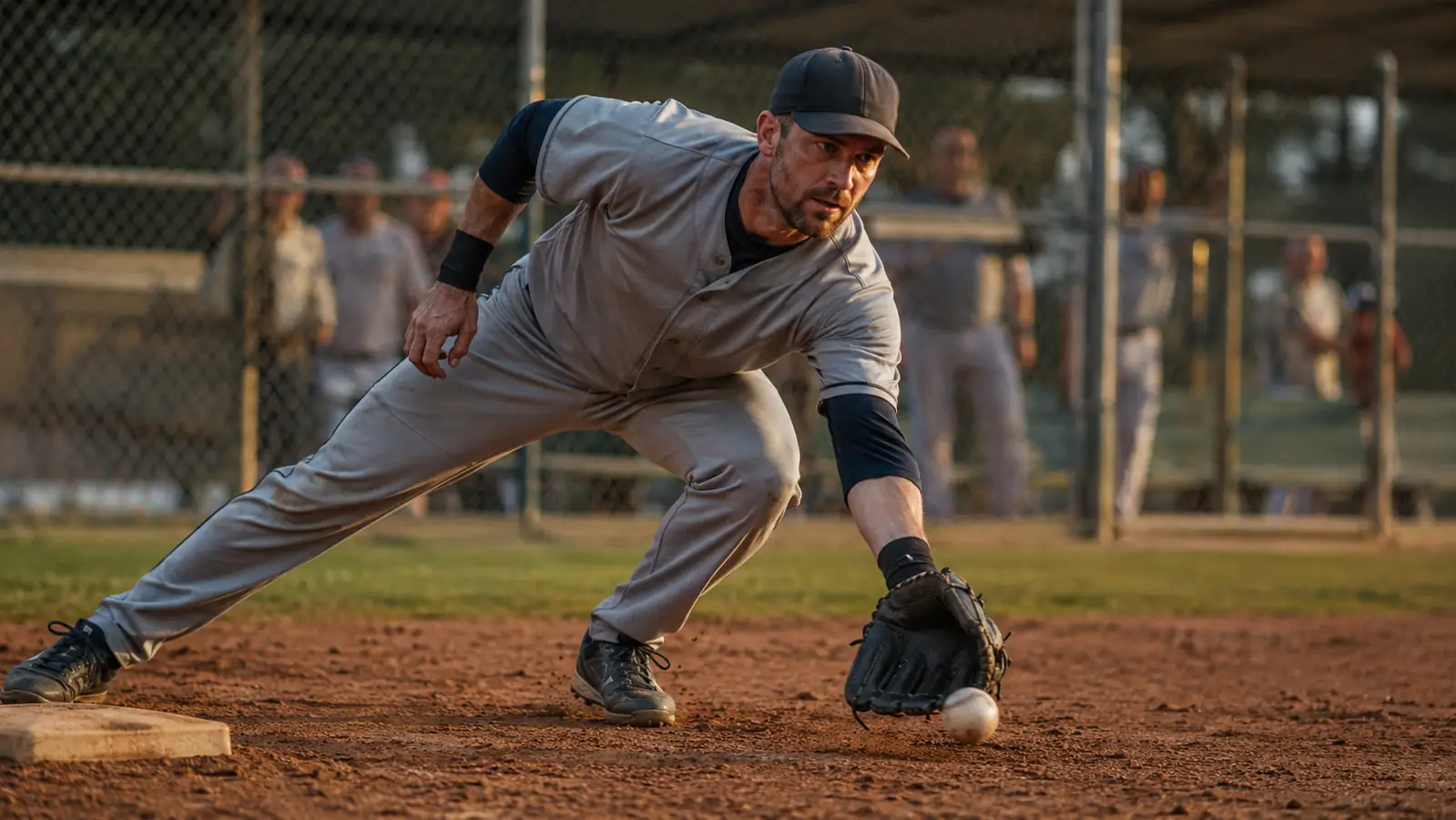
Two hundred and forty-nine dollars for a glove. I said that number out loud in my garage twice before I let myself close the browser tab. I was thirty-nine, back in a Tuesday-night rec league because a buddy from work needed a third baseman, and I'd been playing catch with a $34 glove I grabbed off a clearance rack back in 2019. It worked fine for playing catch with my daughter in the backyard. It did not work fine for a hard-hit ball with a man on second and a real inning on the line.
I'd had my eye on the Wilson A2000 for about four months before I actually bought one, mostly because every guy on my team who owned one used almost the same word for it: trustworthy. Not flashy, not fast, just a glove that closes on the ball and stays closed. I kept telling myself I'd wait until fall, wait until my birthday, wait until I was sure this rec league thing was going to stick past one season. Waiting was really just a nicer word for scared to spend that kind of money on myself.

What finally moved me wasn't a sale. It was a Tuesday game in July where I short-hopped a routine two-hopper at third, the ball popped clean out of the webbing of my $34 glove, and it rolled untouched into short left field. Nobody yelled at me. I yelled at myself the whole drive home. My daughter Piper, twelve and already three seasons into travel softball with a glove nicer than mine, asked why my glove looked so beat up in the pictures from that game. That was the actual moment. Not the error. The question.
So I ordered the Wilson A2000, the 11.5 inch infield pattern, Pro Stock leather, and braced for the break-in everybody online warned me about. It showed up stiff enough that I couldn't close the fingers around a ball with one hand. I worked a light coat of glove conditioner into the pocket and laces that first night, played catch with Piper for about twenty minutes a day for a week straight, and by the second Tuesday game the pocket had a shape that actually matched how I catch, thumb down, ball settling into the heel instead of my fingers.
The glove didn't make me a better third baseman. It just stopped getting in the way of the third baseman I already was.
Still on the fence about spending real money on a glove for one rec league?
I asked myself the same question for four months. What changed my mind wasn't a review, it was the bad hop. If you're already sure the glove you're using is the reason you're second-guessing every hard-hit ball, here's the one I finally bought.
Amazon Check Today's Price on Amazon →
Here's the part I didn't expect. Once the leather broke in, I noticed how much less I was thinking about my hands and how much more I was thinking about the runner. With the old glove I was always aware of the ball hitting the pocket wrong, always double-clutching before I threw. With the Wilson A2000 the transfer got quiet. I caught it, it was already in position, I threw. That quarter-second is the whole difference between a routine out and an infield single in a men's league where nobody runs especially fast but everybody runs.
It also changed something at home I hadn't planned for. Piper started asking to use my glove for her own infield reps because the pocket held its shape better than her glove did at the time, and we ended up doing more backyard drills together that fall than we had in the two years before, partly because I actually wanted to be out there with a glove that felt good on my hand instead of one I was just tolerating.

I still think about that $249.95 number sometimes when the receipt shows up in my email search. But I don't think about it the way I did standing in the garage. I think about the year-plus it's been on my hand now, the number of Tuesday nights it's turned into catch with Piper, the exact play at third that finally justified spending money on my own gear instead of only hers. Cost per use, it's turned into the cheapest piece of equipment I own.
What I'd Tell You If We Were Sitting at My Kitchen Table
If you're standing in your own garage running the same math I did, here's the honest version. A $249.95 glove will not turn a bad defender into a good one. It won't fix your footwork or your first step. What it does is stop the equipment from being the reason you missed a play you should have made. If you're playing more than a season or two, coaching your own kid on the side, or just tired of fighting a glove that never quite closes right, the A2000 earns its price the same slow way mine did, one clean transfer at a time, one season it doesn't fall apart on you. If you're playing twice a summer for fun, keep the $34 glove and spend the money somewhere else. I'm not going to pretend everybody needs this.
Ready to stop fighting your glove every single inning?
It took me four months and one embarrassing error to make this move. You don't need either. Here's the glove that ended up on my hand for good.
Amazon See the Wilson A2000 on Amazon →