
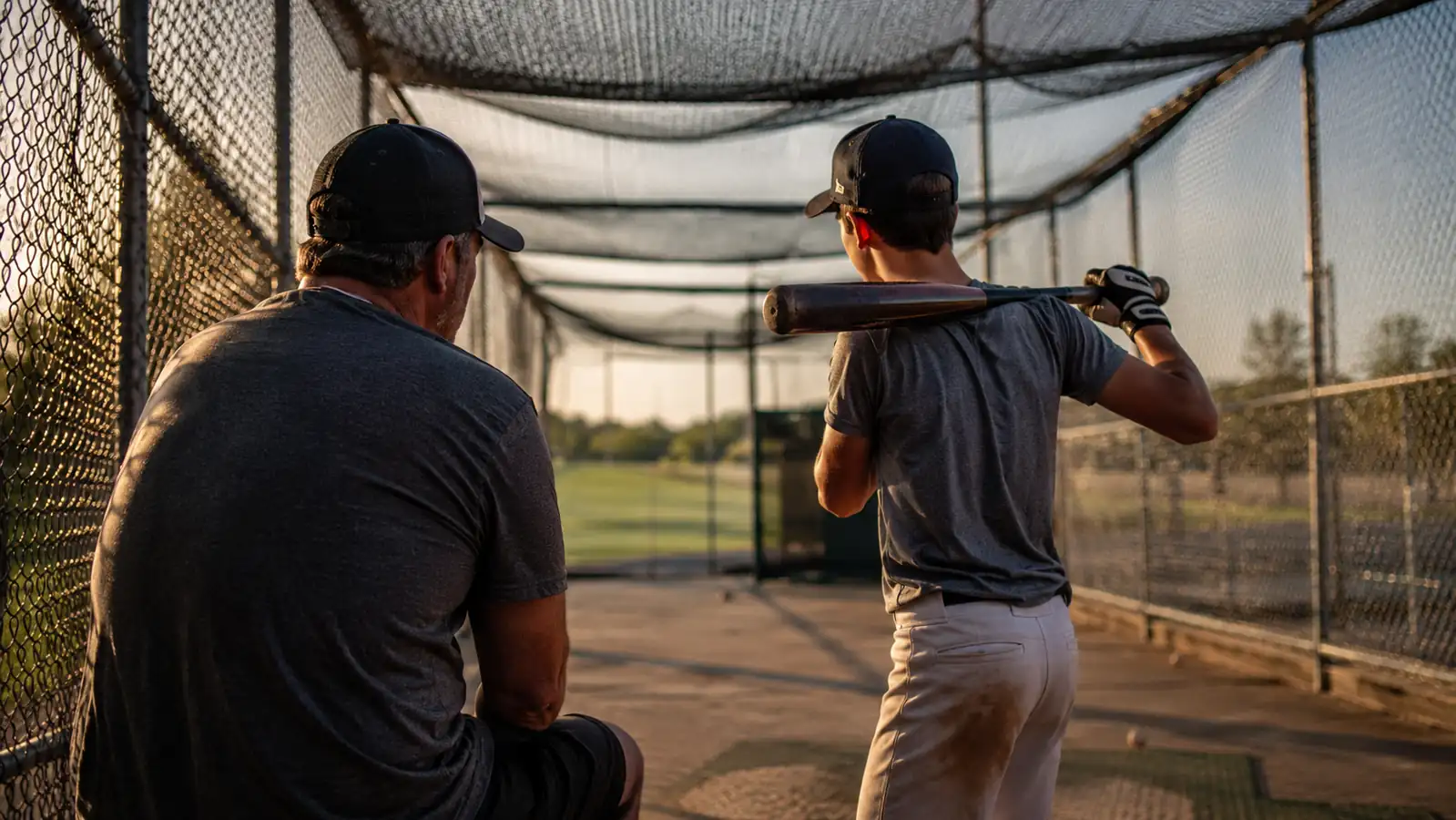
My son Cole struck out looking on a fastball right down the middle in the last game of his sophomore rec league season, and I remember thinking one word: again. Two years. Two full seasons of watching him get jammed on inside pitches, roll weak grounders to short that used to be line drives, and slowly stop taking batting practice seriously because nothing he tried was working.
We did what every baseball parent does when a kid stalls out. We hired a hitting coach for six weeks of Saturday mornings, not cheap, and I'll admit I resented every one of those Saturdays a little. We rebuilt his stance twice. We bought one of those spinning swing trainers off a late-night ad that promised to fix his hips in ten minutes a day. Every fix targeted his mechanics. Not one of us ever looked at the bat in his hands.

In my head a bat was just a bat, aluminum or composite, swing it hard, hit the ball. Cole had been using the same lightweight drop-8 he'd grown into around 8U, years before anyone mentioned a BBCOR bat like the Louisville Slugger Meta was even on the horizon, and I honestly figured a bat was the last thing worth troubleshooting on a kid who was clearly overthinking every at-bat. I was wrong about that, and it cost us two seasons finding out.
The turning point had nothing to do with a lesson. It was a Sunday doubleheader, between games, and another dad let Cole take a few cage swings with his BBCOR bat while we waited for the field to clear. Cole came back to the dugout holding it out in front of him like it had done something to him personally. "That felt different," he said. "I don't know how. It just did."
I went home and actually read up on the difference between the drop-8 he'd outgrown and a real BBCOR bat, the ones with a -3 length-to-weight ratio that most high school and older travel leagues require. A heavier, more balanced barrel changes how a swing feels through the zone, not just how far the ball goes. Cole wasn't failing at hitting. He'd been swinging equipment built for a body he no longer had.

I landed on the Louisville Slugger Meta, a 32-inch, 29-ounce (-3) BBCOR model, mostly because it was the bat Cole had already borrowed and liked, and because the reviews from other rec league and high school parents matched what I was seeing with my own eyes: consistent barrel feel, real pop for an alloy-composite hybrid, and none of the horror stories about dented barrels after one season.
The bat wasn't the whole answer. But it was the first honest diagnostic we'd had in two years, and it's a lot cheaper than another round of Saturday lessons.
Before you book another hitting lesson, rule out the bat
If your kid has outgrown a youth bat and nobody's mentioned it, that's worth ten minutes before you spend another dollar on coaching. See the current price and specs on the Louisville Slugger Meta BBCOR bat.
Amazon Check Today's Price on Amazon →We ordered the bat that week and Cole took it straight to the cage the following Saturday. The first thing he noticed wasn't power, it was timing. He said the barrel got to the zone when he expected it to, instead of a half-beat late the way his old bat had felt for the last several months without either of us realizing it.
His first live game with it was unremarkable in the best way. Two ground ball outs, but both were sharp, pulled hard through the left side instead of the soft rollers he'd been hitting all spring. His coach actually pointed it out from the third base box, asked him what changed. Cole held up the bat like an answer.

I talked to two other rec league dads that same week who'd gone through some version of the same thing, a kid stuck at the plate, a coach chasing mechanics, nobody checking whether the bat still matched the kid. One of them had his daughter, a fastpitch player, sized for a drop-10 for two full seasons past when she should have moved up. Once she got fitted properly, her exit velocity jumped in a single week of practice.
Three games later Cole hit a double off the fence in right center, the kind of contact he hadn't made since he was thirteen. I'm not going to tell you a new bat turns a struggling kid into a .400 hitter, because it doesn't, and anyone selling you that story is selling you something else. What it did was remove one variable that had quietly been working against him the entire time.
By the end of that summer season his average had climbed enough that his coach moved him up in the order, and more importantly, he stopped dreading his at-bats. That part mattered more to me than any stat line. A kid who's excited to hit again is a different kid at practice, in the car on the way home, at dinner.
What I'd Tell You If We Were Sitting at My Kitchen Table
If your son or daughter has been in a slump for more than half a season and you've already worked on mechanics, get their bat measured for length and weight before you spend another dime on lessons. Growth spurts sneak up on parents faster than they sneak up on the kid. A properly sized BBCOR bat like the Meta won't fix bad habits, and it won't fix a swing that's genuinely broken, but it will stop punishing a swing that's actually fine underneath all that frustration. Get the length right, get the drop weight right, and let the kid feel the difference for himself in the cage before you ever hand him a lineup card. That's the whole trick. There isn't a second one.
Measure twice, swing once
Check the current price and available lengths for the Louisville Slugger Meta BBCOR bat before you sign up for another round of lessons.
Amazon Check Today's Price on Amazon →