
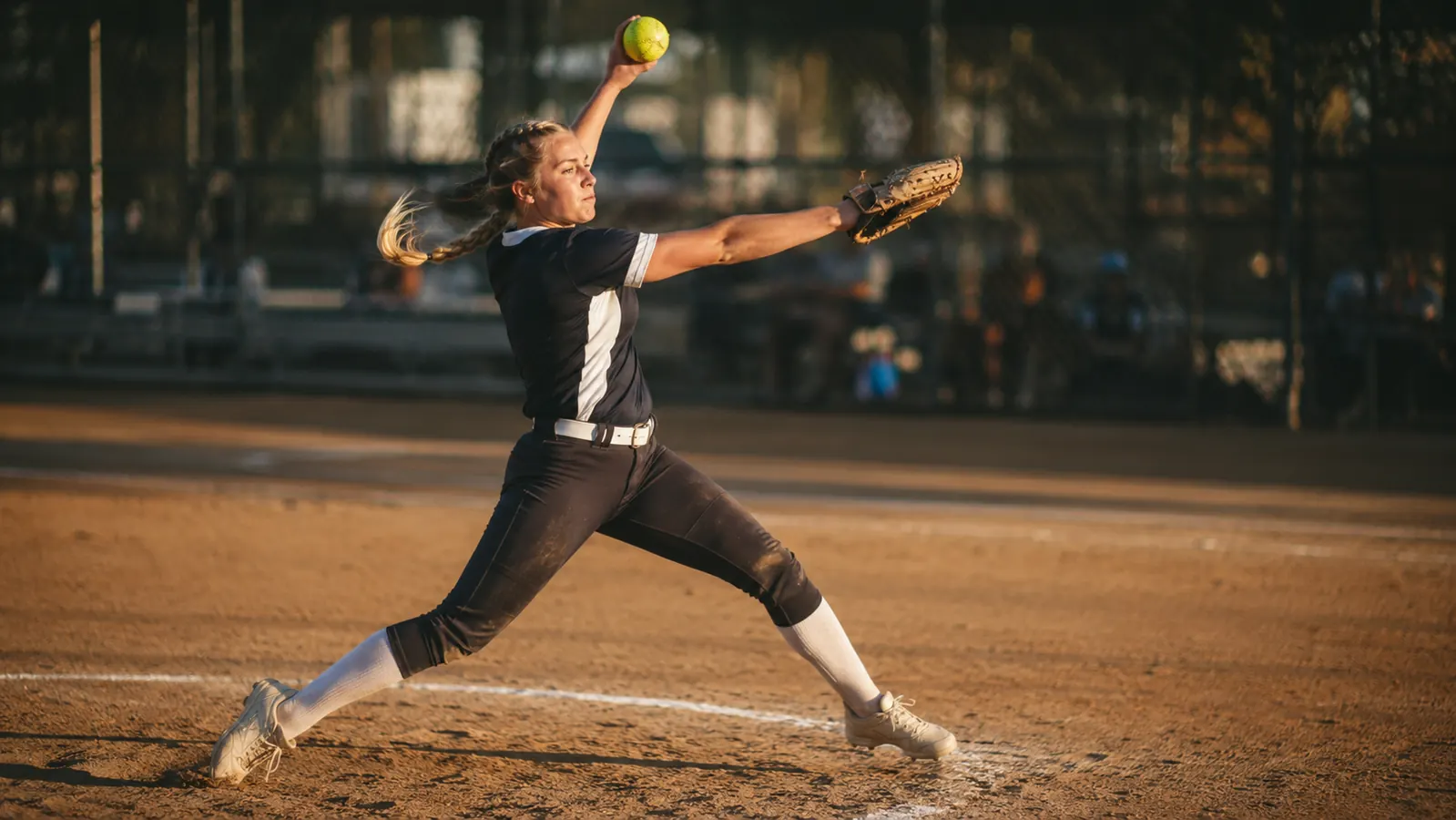
My daughter Piper throws a windmill delivery that looks smoother than mine ever did in a batting cage, and for the last year and a half I've stood behind a chain-link fence pointing a Pocket Radar Smart Coach at her release point more times than I can count. I bought it expecting a simple job: tell us the number, log the number, move on. What I didn't expect was to end up standing in a gravel parking lot outside a recruiting showcase in Huntsville, Alabama, arguing with myself over a five mile an hour gap between what my radar said at home and what the evaluator's gun said that day.
That gap is the whole reason this review exists. Plenty of sites will tell you the Pocket Radar Smart Coach is accurate. Fewer will tell you exactly when it stops being accurate, and why that matters more in fastpitch softball than it does for a kid throwing overhand off a mound. This is the version of that story.
The Quick Verdict
Reliable enough to trust for training, close enough to trust for casual comparison, but not something I'd stake a recruiting profile on without a second data point.
Amazon Check Today's Price →Before your next bullpen turns into a guessing game, get a number you can actually track.
The Pocket Radar Smart Coach won't replace a stadium gun, but it will tell you more truth than a stopwatch and a gut feeling ever did.
Amazon Check Today's Price on Amazon →How I've Actually Used It
This isn't a gadget that sat in a drawer after the first week. Piper pitches for a travel team based outside Nashville, and between her bullpens and my own Sunday morning rec league at-bats against guys throwing mid-50s off a mound, the Smart Coach has probably clocked somewhere north of four thousand pitches and swings since I bought it in the spring of last year. It rides in the same bag as her rosin and her ankle brace.
The bulk of the use is unglamorous. Tuesday and Thursday bullpens in a public park behind our house, a bucket of balls, a bungee cord looping the device to the chain-link fence at roughly shoulder height because we never got around to buying a real mount for it. I open the companion app, hit record, and she throws. The number pops up almost instantly, and it logs to a session history I can scroll through later.
The other use case is quieter but honestly more valuable: comparing this week to six weeks ago. Fastpitch velocity doesn't climb in a straight line, especially for a fifteen-year-old still growing into her hips and shoulders. Having an actual logged number instead of a memory of 'she looked faster today' changed how we talked about her training. That part of the product I have almost no complaints about.
I've also pointed it at my own fastball more than a few times, mostly to settle bets in our Sunday league dugout about who actually throws hardest on the roster. It's less rigorous than the softball sessions, more of a novelty, but it's told me the truth I didn't necessarily want to hear: my fastball tops out in the low 60s and has for years, no matter how good I feel walking out to the mound. There's something clarifying about a device that doesn't care how confident you looked on the delivery.

What the Numbers Actually Told Us
For months, Piper's fastball sat in a tight band, 51 to 55 miles per hour, measured the same way every time: me standing directly behind the plate-side fence, device braced at shoulder height, roughly ten feet back from her release point. Those numbers felt stable enough that I stopped questioning them. That's the trap. Consistency with yourself isn't the same thing as accuracy against a stadium-grade gun, and I didn't learn the difference until it cost us something.
At the Huntsville showcase last June, a college assistant running a fixed radar gun on the mound had Piper's fastball at 48 miles per hour on a pitch our Smart Coach had been reading as 53 for weeks. Five miles an hour doesn't sound like much until you understand that in fastpitch recruiting conversations, that gap is roughly the difference between a coach leaning forward and a coach checking his phone. I stood behind the backstop doing math in my head, wondering if I'd been lying to my own daughter about her progress for two months.
The honest answer, after comparing notes with a hitting facility instructor a week later, is that the gap wasn't really the radar's fault. It was mine. I'd been standing at a slight angle to compensate for the fence post, and with a windmill delivery the release point sweeps through an arc near hip height rather than dropping straight down like an overhand pitch. Off-axis error is real on this device, and a softball delivery gives you more ways to introduce it without realizing it.
Where the Readings Get Shaky
Nobody selling this thing tells you that windmill mechanics are a harder use case than a standard baseball pitching motion, and I understand why. It's not a flattering detail. But it's true, and it's the single biggest thing I'd want a fastpitch parent to know before they buy one expecting stadium-gun precision out of the box.
The manual is clear that you should stand directly in line with the pitch, ideally right behind the pitcher or right behind the catcher. In practice, fences, dugouts, and other parents make that exact spot hard to occupy every single time. A baseball pitcher's release point stays fairly fixed relative to the mound. A windmill pitcher's arm comes through a full circle, and the release happens low and to the side, which means a few degrees of misalignment reads differently than it would on an overhand throw.
We also noticed the gap widens on movement pitches. Piper's changeup and riseball, both slower and both released with slightly different arm speed and wrist angle, showed more session-to-session variation than her fastball did, even when we kept our positioning identical. If you're only using this for straight fastball tracking, that inconsistency barely matters. If you're trying to log an entire pitch mix the way a serious travel pitcher eventually needs to, it's worth knowing the numbers on secondary pitches deserve more skepticism than the fastball number does.

The App Is Doing More Than People Give It Credit For
Separate from the accuracy question, the software side of this thing is better than I expected going in. The session logging, the ability to tag pitch type, the simple line graph of velocity over time, all of it is genuinely useful for a parent who isn't a coach and doesn't want to build a spreadsheet by hand. Piper checks her own trend line more than I do at this point, which tells you something about how low-friction it is.
Where the app falls short is anything resembling context. It will tell you a pitch was 53 miles an hour. It won't tell you that reading came on a cold, windy March evening when her hands were half numb, or that it came during game three of a Saturday doubleheader when her legs were dead. We started jotting quick notes in the app's comment field after sessions, which fixed most of the problem, but that's a workaround we built, not a feature the product ships with.
Comparing Notes With Other Parents at the Fence
Piper's travel team has four other pitchers, and by the middle of last season three of those families had bought a Smart Coach too, mostly because they'd seen ours at the fence during tournaments and wanted their own number. Comparing notes turned into an accidental study. Two of them stood in roughly the same spot we did, behind the pitcher rather than off to the side, and their readings tracked closer to what showed up on facility guns than the readings from families who stood along the first base line to stay clear of foul balls.
That's the pattern nobody flags for you when you buy one of these. Fastpitch mound distance is 43 feet, a good bit shorter than the 60 feet 6 inches a baseball pitcher throws from, which means small positioning errors get magnified over a shorter path. Stand a few feet off-line at a baseball diamond and the angle barely changes by the time the ball reaches the plate. Do the same thing at a softball circle and the angle shift is proportionally bigger relative to the whole throw. It's physics, not a flaw in the device, but it's exactly the kind of detail that turns an accurate radar into a misleading one if you don't know to account for it.
The Alternatives We Tried First
We didn't go straight to the Smart Coach. Before I spent this kind of money on a radar gun, I wanted to know it was actually necessary, so we tried three cheaper routes first, and all three failed in different ways.
The first was a novelty speed gun from a big-box sporting goods store, the kind that looks like a real radar gun but costs less than a decent glove. It gave wildly different readings on back-to-back identical pitches, sometimes by ten miles an hour, which made it useless for tracking anything over time. The second was renting time on the fixed JUGS-style gun at our local indoor training facility, which was accurate but cost money every single visit and gave us no way to log or compare sessions ourselves. The third was a slow-motion phone video method, filming at a known distance and counting frames to estimate speed by hand. It worked reasonably well for a one-off check, but it was too slow and too fiddly to use in a live bullpen where Piper is throwing every fifteen seconds.
Against those three, the Smart Coach is the only one that gave us real-time numbers, a history we could actually look back on, and enough portability to bring to any field, any facility, any showcase. It's not that it's flawless. It's that everything cheaper we tried was flawed in a way that mattered more.
There's also the question of whether we needed something this capable at all. A rec-league dad chasing bragging rights doesn't need session logging or a phone app; a stopwatch and a friend counting Mississippis would probably settle most arguments. But once Piper started throwing in front of college coaches, the calculus changed. A parent tracking a genuine travel-ball or showcase career needs a record they can point back to later, not just a number they remember.

Battery, Durability, and the Small Stuff Nobody Reviews
The rechargeable battery gets us through roughly three full practice sessions before I need to plug it in again, longer if I remember to close the app between bullpens instead of leaving the screen on the whole time. That's held steady even into this past summer's tournament heat, which is more than I can say for some of our other electronics in a bag that sits in a hot trunk half the season.
It has taken one real hit. During an outdoor session in early spring, a wind gust snapped the bungee cord I'd been using to brace it against the fence rail, and it dropped about four feet onto turf. The case picked up a visible scuff along one edge, but it powered on afterward and the readings didn't change. I wouldn't call that a stress test, but it told me the housing isn't as delicate as the price tag might suggest.
The carrying pouch it ships with is thin enough that I don't fully trust it loose in a bag with cleats and a bat, so it usually rides in the front pocket of Piper's bag by itself, wrapped in an old sunglasses case for extra padding. That's a small workaround, but worth mentioning, since the included case reads more like an afterthought than real protection for something you're carrying to every practice.
What I Liked
- Real-time readings with almost no learning curve, Piper was using it herself within a week
- Session logging and trend graphs make it easy to see progress instead of guessing at it
- Portable enough to bring to any field, facility, or showcase without hauling equipment
- Held up through a genuine accidental drop with no change in reading quality
- Rechargeable battery covers a full multi-hour practice without needing a mid-session charge
Where It Falls Short
- Windmill delivery introduces more off-axis error than an overhand pitching motion, and the manual doesn't warn you about this
- Secondary pitches like changeups and riseballs show more session-to-session variation than fastballs
- No built-in way to note conditions like wind, fatigue, or a bad angle, you have to build that habit yourself
- A single unit costs more than most families expect to spend on a training gadget
The radar isn't lying to you. It's just answering a slightly different question than the one you think you're asking.
Who This Is For
This makes sense for a family with a pitcher, baseball or fastpitch, who trains regularly enough that a single number stops being interesting and a trend line starts mattering more. It's also a fair fit for an adult rec-league player who wants an honest read on their own fastball without driving to a facility every time. If you're going to use it more than a handful of times a season, the accuracy caveats stop being a dealbreaker and start being just something you learn to work around, the same way you learn where the good light is at your home field.
Who Should Skip It
If the entire reason you're buying this is to generate a number for a recruiting profile or a scouting form, I'd think twice, or at minimum plan to cross-check it against a facility or showcase gun before you send anything official. A radar you calibrate to your own backyard habits, without realizing it, can quietly drift from what a stadium gun will say, and in recruiting conversations that drift can cost more than the device itself. It's also probably not worth the price for a family that just wants a fun once-a-summer novelty reading rather than a real training tool.
Track the real number, not the guess you've been telling yourself.
Used correctly, the Pocket Radar Smart Coach earns its place in the bag. Just know its blind spots going in.
Amazon See Current Price and Availability →