
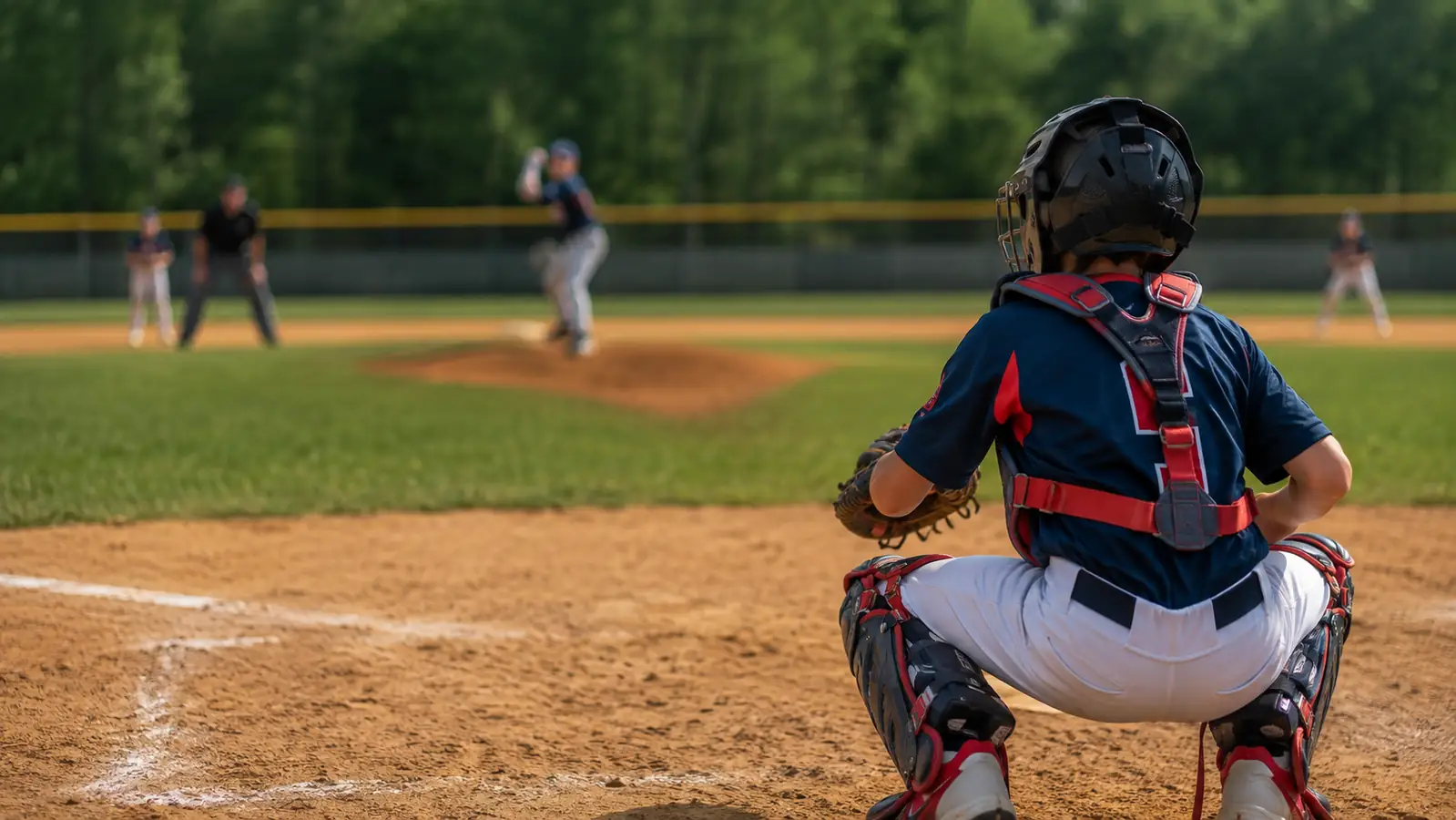
My son Sawyer caught his first full travel season this spring at eleven years old, and the gear he started it in was a mess. A hand-me-down chest protector from a teammate's older brother, a pair of leg guards I found at a garage sale for ten bucks, and a batting helmet with a catcher's cage bolted onto it separately. None of it was made for the other pieces. The chest protector rode up high on his chest, the leg guards left a bare patch at his knee when he dropped into a crouch, and the helmet's ear flaps sat lower than the chest protector's collar. It looked like gear. It didn't fit like gear.
Once his birthday money and my patience ran out, we bought him a Rawlings Velo 2.0 catcher's set, chest protector, leg guards, and helmet, sized and sold together. It sounds like a small thing to buy three pieces from one box instead of three different bins. It isn't. Here's what actually changes when the gear is built as a matched set instead of assembled piece by piece.
Stop guessing which sizes go together. Buy the set that's already matched.
The Rawlings Velo 2.0 set sizes the chest protector, leg guards, and helmet off the same chart, so you're not cross-referencing three different brands' size guides and hoping they line up.
Amazon Check Today's Price on Amazon →A Matched Set Is Sized as One System, Not Three Guesses
Every piece in the Velo 2.0 line comes off the same youth-to-adult size chart, so an Intermediate chest protector, Intermediate leg guards, and Intermediate helmet are all cut for the same body proportions. Buy a chest protector in one brand's "Youth" and leg guards in another brand's "Small" and you're stacking two different companies' guesses about what those words mean. We learned that the hard way with Sawyer's garage-sale leg guards, which were labeled "Youth" but fit like they were meant for an eight-year-old, not an eleven-year-old catcher.

The Padding Density Matches From Piece to Piece
Where the chest protector's bottom edge meets the top of the leg guards, you want the foam density to be roughly consistent, not a firm chest pad handing off to a soft, broken-in leg guard with a different fill. A matched set is designed with that handoff in mind. When we ran mismatched pieces, there was a noticeably softer strip right at Sawyer's hip where two unrelated foams met, and it showed up as a visible dent line on the pads after a season of use.
The Straps and Buckles Are Made to Line Up
The chest protector's shoulder harness and the leg guards' thigh strap are positioned so they don't compete for the same real estate on a kid's frame. On the mismatched setup, the chest protector's bottom strap and the leg guard's top strap crossed right over each other, which meant Sawyer was cinching two separate buckles into the same six inches of leg. On the Velo 2.0 set, that overlap doesn't happen because both pieces were designed with the other one in mind.
One Return Window Instead of Three
Buy a chest protector from one retailer, leg guards from another, and a helmet from a third, and you're tracking three separate receipts, three separate return policies, and three separate clocks if something doesn't fit right out of the box. A set purchased in one order has one delivery date and one return window to work with, which matters a lot more than it sounds like when you're trying to get gear broken in before the first scrimmage.

The Whole Kit Weighs Less When It's Designed Together
Pieces bought separately tend to each over-build their own coverage, since no single manufacturer knows what you're pairing them with, so they pad generously to be safe. A set built as a unit can rely on the other pieces to cover certain zones and trim bulk elsewhere. Sawyer's full Velo 2.0 set is noticeably lighter on him than the mismatched pile was, and after two innings in June heat, every ounce he isn't carrying around matters to an eleven-year-old.
Chest Protector and Leg Guards Actually Overlap at the Knee
This is the gap that bothered me most with the garage-sale setup: when Sawyer dropped into his crouch, there was a two-inch strip of bare uniform between the bottom of the chest protector and the top of the leg guards. A matched set accounts for how far the chest protector rides down and how high the leg guards sit when a catcher is actually squatting, not just standing up straight in a fitting room. On the Velo 2.0 set, that overlap holds even in a full crouch.
The Helmet's Collar Height Matches the Chest Protector
The bottom of a catcher's helmet cage and the top of the chest protector's collar should sit close enough that there's no exposed strip of neck between them when the head is down tracking a pitch. Sawyer's old bolted-on cage sat noticeably higher than his hand-me-down chest protector's collar. Buying the helmet and chest protector as one set means the two companies didn't design them in isolation from each other.

Cost Per Season Beats Buying Three Pieces Separately
I priced it out before we switched: three separate name-brand pieces, chest protector, leg guards, and helmet, bought individually usually run higher combined than the same three pieces sold as a set, once you add up separate shipping and the fact that individually-sold pieces are often the current top-tier model with a top-tier price tag attached to each one. The Velo 2.0 set's current price on Amazon covers all three pieces at once, which is worth checking against buying each piece separately before you decide.
Amazon Compare the Velo 2.0 set's price to buying separately →
One Cleaning and Maintenance Routine, Not Three Materials
Mismatched gear usually means mismatched materials, one piece in a mesh-backed synthetic, another in a heavier vinyl shell, each wanting different care to avoid cracking or mildew. A matched set uses the same shell material and the same padding foam across chest protector and leg guards, so I'm following one maintenance routine, wipe down after practice, air dry out of the bag, instead of remembering which piece needs which treatment.
It Holds Resale and Hand-Me-Down Value as a Full Set
When Sawyer eventually outgrows this size, a complete matched set is something I can hand down to a younger catcher on the team or sell as one listing to another parent. Three orphaned pieces from three different brands, bought at three different times, are a much harder sell individually, and nobody wants a chest protector with no matching leg guards. A set stays a set, even secondhand.
What I'd Skip
I'd skip buying "growth room" oversized gear on the theory that it'll last two extra seasons. A chest protector that's too big shifts and rides up exactly where you don't want a gap, which undoes most of the benefit of buying a matched set in the first place. I'd also skip off-brand knockoff sets that copy the look of a name-brand kit but don't publish an actual size chart tying the three pieces together, since the whole point of buying a set is that someone already did the sizing math for you.
A matched set doesn't make a catcher better. It just means the gear stops arguing with itself.
One box, one size chart, three pieces that were built for each other.
Check today's price and available sizes for the Rawlings Velo 2.0 catcher's set before you piece together a kit from three different bins.
Amazon Check Today's Price on Amazon →