
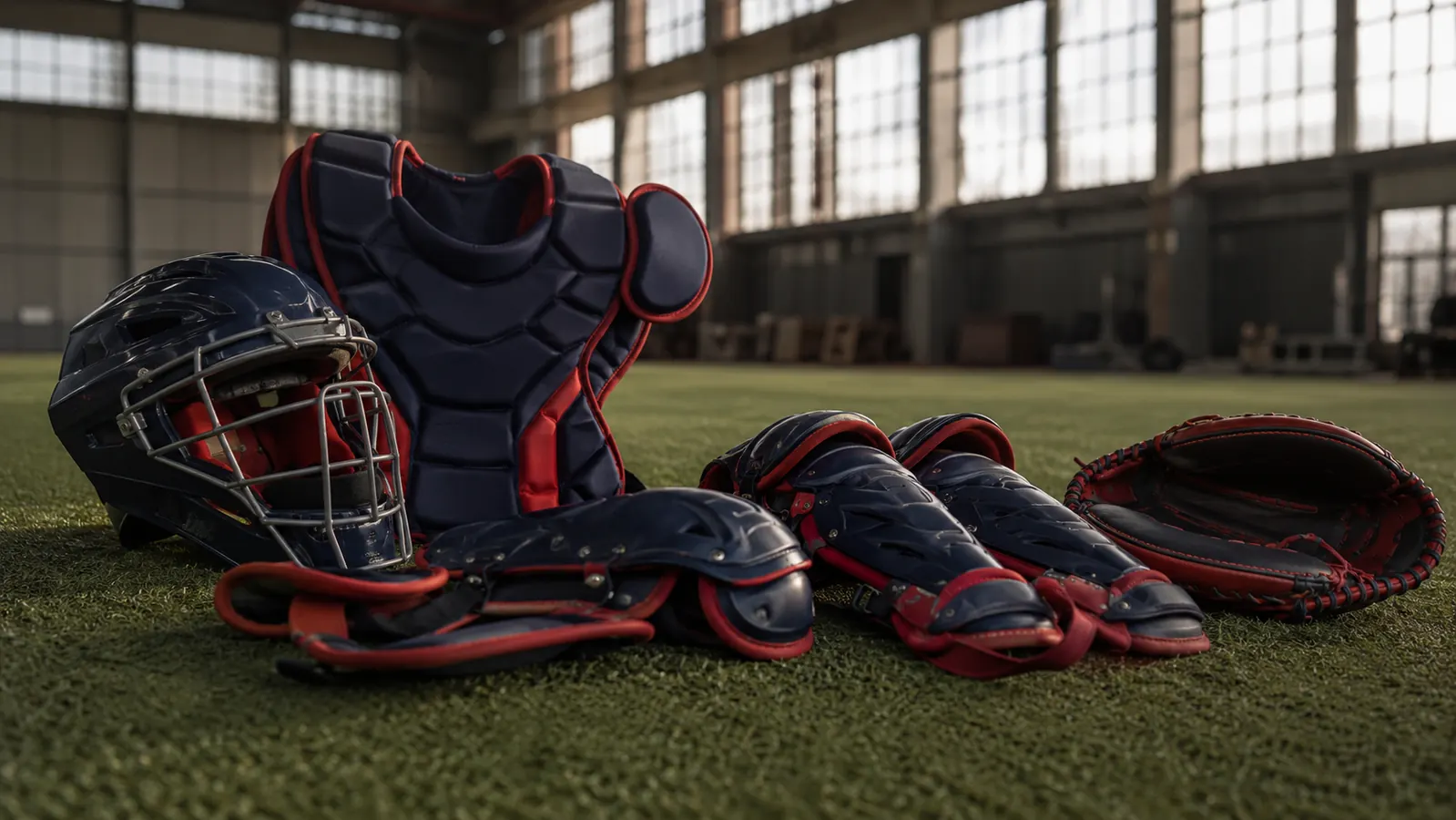
My daughter Wren is fifteen, about 5'7" and 155 pounds, and she was two weeks out from JV-to-varsity fastpitch tryouts when her old chest protector cracked down the sternum plate during a bullpen. I ordered the Rawlings Velo 2.0 Catcher's Set that same night, mostly because the size chart put her right in the intermediate range and because the Rawlings name already had my trust from her glove. I want to be upfront before you read another word: this isn't a takedown piece, and she still wears this set. But there's a gap between what the product listing implies and what actually shows up at your door, and I would have set different expectations for the money if someone had spelled it out for me first.
So this is the review I wish I'd had. What's actually in the box versus what the photos suggest, where the sizing chart quietly steers you wrong, and which pieces of padding started giving out well before the season did. None of it makes this a bad set. It just makes it a set with real edges, and those edges matter more once you've paid for it than before.
The Quick Verdict
Solid, matched protection for the price, but the box ships lighter than the marketing suggests, the chest protector runs short at the low end of intermediate, and a few strap and coating details show wear faster than I expected.
Amazon Check Today's Price →Before you add this to cart, see exactly what's in the box.
The Velo 2.0 is a real matched set, chest protector, leg guards, and a two-tone helmet, but it's worth knowing the sizing and contents before you order. Check current sizing and today's price on Amazon.
Amazon Check Today's Price on Amazon →How I've Used It
We bought the set in early October, ahead of an indoor winter season that runs November through February at a fieldhouse forty minutes from us in northeast Ohio, turf floor, portable mound, the works. Wren caught bullpens and live at-bats there twice a week straight through the winter, and by the time outdoor scrimmages started in March, we'd logged 58 recorded indoor practices plus six outdoor sessions before tryouts. That's the stretch this review is based on, a full indoor season and the transition into outdoor spring ball, not a single tournament weekend.
Indoor turf is a different kind of wear test than a grass field. There's no dirt to soften a block, the ball skips truer and faster off turf, and the fieldhouse itself runs cold enough in January that gear never fully warms up before a session starts. Wren noticed the chest protector felt stiffer in the first ten minutes of a January practice than it did in October, which tracks with how foam behaves in cold air. It softened up as she moved, but that first-ten-minutes stiffness became a small ritual we planned around, stretching and light movement before she strapped in.
Between sessions, the gear rode in a duffel in the back of my car, not a locker, which matters for how fast padding breaks down. It also sat damp more often than I'd like to admit, because a forty-minute drive home in January isn't long enough to air anything out, and a rushed weeknight schedule meant it sometimes went straight back in the bag before the next practice. I'm noting that because it's real use, not a showroom version of the product, and some of what I describe below is a little worse than it might be for a family with more time to let gear breathe. We eventually started keeping a small towel in the bag specifically to wipe down the chest protector's inner lining before it went back in, which took maybe ninety seconds and made a noticeable difference in how the padding smelled and felt by the second half of the season, a habit I'd tell any new Velo 2.0 owner to start on day one instead of week six like we did.

The Marketing Photos vs. What Actually Ships
Here's the first thing nobody tells you clearly enough in the listing: this is a chest protector, leg guards, and a helmet with an attached cage. That's it. The product photos are staged with a catcher's mitt in frame, and the word "set" does a lot of quiet work implying you're getting a complete kit. You are not. We had to make a second order for a mitt the same week, which we should have known going in but didn't, because I read the bullet points twice and the mitt is never actually listed as included, it's just photographed next to the gear.
The bag situation is similar. What ships is a thin mesh sack, fine for keeping the three pieces together in a closet, not something you'd trust to survive being tossed around a dugout or a fieldhouse floor for a season. We were already planning to buy a real equipment bag, so this wasn't a dealbreaker for us, but if you're budgeting for a complete catcher's setup in one purchase, add the cost of a mitt and a real bag before you decide whether the total price makes sense.
The other small surprise was weight. The listing's spec sheet numbers read lighter on paper than the set felt in hand once we had all three pieces on a scale, close to a pound heavier combined than what I'd mentally budgeted for based on the product description. It's not a huge difference and it didn't change how Wren moved in it, but if you're comparing this set against a lighter competitor using only the listed spec numbers, know that our real-world weigh-in ran a bit over what's printed.
Sizing: Where the Chart Gets It Wrong
Wren's height and weight landed her squarely in the intermediate range on Rawlings' chart, and for the leg guards and helmet, that chart was right. The leg guards fit her shin-to-instep length well from the first practice, and the helmet needed no padding swap. The chest protector is the piece where the chart let us down. It fits her chest and shoulders fine, but the torso length runs short on her, riding a couple inches higher than I'd want by the time she's set in a full crouch, leaving a strip near her belt line that the wing panels don't fully cover when she leans forward to block a low pitch.
I don't think that's a defect so much as a mismatch between a chart built around chest and shoulder measurements and a kid who's tall for her weight, which describes a lot of fifteen-year-old fastpitch catchers going through a growth spurt. If your player's torso runs long relative to her chest size, I'd size up on the chest protector specifically even if the rest of the chart says intermediate fits. We didn't catch this until the second week of practices, past the point where an easy exchange felt worth the hassle of shipping a worn piece back, so I'm flagging it here so you can check the fit the day it arrives, not two weeks in. For what it's worth, I called Rawlings customer service about the fit once we'd noticed it, and the rep confirmed the chest protector sizing is based on chest circumference and shoulder width rather than torso length, which explained the mismatch but didn't offer much of a fix beyond recommending we size up, something we'd already worked out for ourselves by then.

Where the Padding Held Up, and Where It Didn't
Give credit where it's due first. The helmet's cage held its shape through the entire indoor season with no loosening at the hinge points, and Wren never complained about vision through the bars, even under the fieldhouse's mixed fluorescent and overhead LED lighting, which is a harder visibility test than open daylight. The chest protector's center panel foam is still doing its job at the end of the season, firm where it should be firm, no cracking or splitting along the seams.
The leg guards are where I noticed the most real wear. The knee cap foam is noticeably thinner by eye at practice 58 than it was at practice one, and pressing on it side by side with a fresh pair from the box, the compression is obvious. The underarm strap buckle on the chest protector's harness is the other piece that gave us trouble, it held its adjustment fine through November and December, but by mid-January it had started slipping a notch or two mid-practice, enough that Wren would reach up and re-tighten it between reps without me asking. That's a small thing on any single night and an annoying one by week ten.
The helmet cage's powder coating is the last spot worth mentioning, mostly for anyone who cares how the gear looks after a season rather than just how it performs. There are a few small chips near the earhole and the mask's front bars where foul tips and stray throws have made contact, and one of those chip points had a faint spot of surface rust by February, most likely from the gear sitting damp in the bag on those rushed weeknights I mentioned earlier. It hasn't affected the cage's structure at all, it's purely cosmetic, but it's not what I expected from a helmet this new.
The Smell Problem Nobody Mentions
This is the part of catcher's gear reviews that almost never gets written down, and it should. The chest protector's inner foam holds onto sweat and turf funk in a way that a quick hose-off doesn't fully solve, especially once winter humidity in a closed bag gets involved. By December we'd added a baking soda routine, a light dusting inside the harness left overnight, wiped clean before the next practice, and that helped, but it's an extra step nobody warns you you'll need. If you're the parent who's going to let gear sit in a hot car trunk or a closed bag between practices, budget for some kind of odor treatment as part of owning this set, not as an optional extra.

Comparing Notes with Other Catcher Parents at the Fieldhouse
Our fieldhouse runs three other travel and school teams through the same turf on rotation, and by January I'd started asking the other catcher parents what they were using, partly out of curiosity and partly to sanity-check what we were seeing. Two families were also in the Velo 2.0, one with a shorter, stockier daughter than Wren, and her mom told me the chest protector fit her fine with no torso gap at all, which tracked with what I'd guessed, the sizing issue is really about build proportions, not the chart itself being wrong. The other family had swapped out the stock leg guard straps for aftermarket hook-and-loop replacements by February because theirs had worn out faster than ours, which made me feel better about our set holding on as long as it did.
A third parent was using a different brand entirely, a set that cost noticeably more, and when I asked her directly whether it was worth the difference, she said the extra money bought better ventilation panels and a genuinely lighter chest protector, but the leg guard padding on hers was showing similar compression to ours by the same point in the season. That was useful to hear, because it told me the knee pad wear we were seeing probably isn't a Velo 2.0-specific weakness so much as something that happens to foam padding generally once you put 50-plus practices on it, regardless of price tier.
What I Liked
- Helmet cage held its shape and hinge tension through a full 58-practice indoor season
- Chest protector's center panel foam still firm and uncracked at season's end
- Leg guards and helmet matched the size chart accurately for a tall, lean build
- Matched navy and red color scheme looks legitimate next to teammates' name-brand gear
- Reasonably priced for a three-piece set compared to buying components separately
Where It Falls Short
- Listing photos imply a complete kit, but a catcher's mitt is not included
- Chest protector torso length runs short on tall-for-their-weight builds even within the correct size range
- Underarm strap buckle loses adjustment tension partway through a season
- Helmet cage coating chips and can show surface rust if gear sits damp
- Included storage bag is thin mesh, not built for daily dugout or fieldhouse use
The set will protect her. It just won't stay adjusted, stay odor-free, or look new past the first season, and none of that makes it onto the product page.
Who This Is For
This set is a reasonable buy for a fastpitch or baseball family who already understands what's in the box, chest protector, leg guards, and helmet, nothing more, and who's comparing it against buying three separate mismatched pieces rather than against a full premium kit with a mitt and bag included. It's a good fit for a catcher who's going to see steady practice reps over a full season, indoor or out, and whose torso proportions are average for their height and weight. If you go in knowing you'll add a mitt, a real bag, and an odor routine, the core protection is legitimate for what you're paying.
Who Should Skip It
Skip this one if you're expecting a true all-in-one kit straight out of the box, you'll be disappointed the same week we were. It's also worth passing on if your catcher runs tall and lean relative to her chest measurement, since the torso length on the chest protector is the one fit issue that isn't a simple sizing-up fix, you may end up needing to size the chest protector separately from the rest of the set. And if you're not willing to do basic upkeep, hosing gear down, letting it dry, an occasional odor treatment, the padding and coating will wear faster than the season should require.
Know what you're buying before it shows up at your door.
The Velo 2.0 protects well once you account for the sizing quirks and the missing mitt. Check current sizing options and today's price on the Rawlings Velo 2.0 set on Amazon.
Amazon Check Today's Price on Amazon →